
Affiliate disclosure: Some links on our website may earn a commission. This article explains fitness rebounders and does not claim independent product testing or medical expertise.
FITNESS REBOUNDERS · UK EXPLAINER
What is a fitness rebounder, and how does it work?
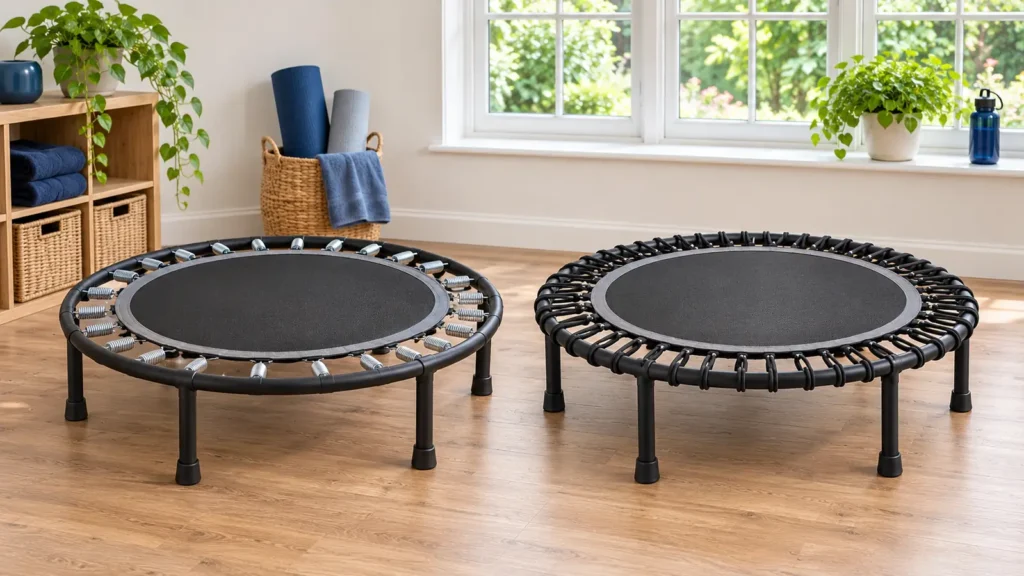
A fitness rebounder is a compact trampoline with a tensioned mat supported by springs or elastic cords. It is intended for controlled exercise movements rather than the high jumping associated with many large recreational garden trampolines.
In brief: your feet transfer force into the mat; the suspension stretches and returns energy as you move. The feel varies with mat size, cord or spring design, user weight and technique. That variation is why two rebounders of similar outer diameter may feel different.
If you already know how rebounders work and want to compare which one to buy, our UK rebounder buying guide is the separate shopping-focused page.
The four parts that shape the rebounding experience
1. Frame and legs
Support the mat at a fixed height. Look for properly secured legs, suitable flooring and a working locking mechanism where the frame folds.
2. Usable jumping mat
The area actually available for foot placement is smaller than the outer frame. Check the usable dimension, not just the advertised diameter.
3. Suspension
Steel springs or elastic bungee cords connect the mat to the frame. Their tension and arrangement influence bounce feel, noise and maintenance.
4. Optional accessories
Some models support a stability bar, protective cover or folding legs. Accessories must be compatible with the precise model; a bar is not a general-purpose handrail.
Rebounders are not interchangeable with traditional backyard trampolines: their intended movements, required space, surrounding clearances and manufacturer instructions can differ considerably.
Spring rebounders versus bungee rebounders
Neither suspension type is automatically the better exercise option. Consider the actual product design and the way it will be used.
| Factor | Spring suspension | Elastic-cord suspension |
|---|---|---|
| Bounce feel | Depends on spring count, design and mat; some users prefer its response. | Depends on cord strength and layout; some models offer selectable resistance. |
| Sound | Metal components may produce audible movement, affected by maintenance. | Often marketed as quieter, but floor vibration and overall design still matter. |
| Maintenance | Inspect springs, hooks, frame and mat according to the manual. | Inspect cords, attachments and mat for wear; confirm access to replacement sets. |
| Buying decision | Check actual capacity, usable mat, height, storage and warranty. | Check actual capacity, usable mat, cord options, storage and warranty. |
Claims that every bungee rebounder is “joint-safe” or that every spring rebounder is harsh are not supported by suspension type alone.
Fitness benefits: what can be said responsibly?
Moving regularly can contribute to physical activity and wellbeing. A rebounder offers one possible way to move at home, but the effects depend on the person, session intensity, time spent and whether the activity is appropriate.
The NHS physical activity guidance for adults recommends regular activity and muscle-strengthening exercise. It does not designate rebounding as a required activity or provide a universal prescription for mini trampolines.
Be cautious with strong claims: sales descriptions about “detox”, immunity, treating arthritis, instant weight loss or preventing falls do not demonstrate clinical outcomes for everyone. We do not infer those outcomes from the fact that a person is bouncing. Exercise should match the individual’s health, fitness and mobility.
If you have medical concerns, have not exercised for some time or struggle with balance, seek professional advice before using an unstable surface. See the separate older-adult suitability checklist for buying considerations related to balance and falls.
Planning a safe home set-up
- Read the model manual: check permitted activities, user limits, assembly, maintenance and the supplier’s flooring advice.
- Choose a suitable space: allow the recommended free area at the sides and above the rebounder; move nearby furniture and obstructions.
- Inspect before use: look for loose legs, worn springs or cords, damaged mats and unstable parts.
- Follow the manufacturer’s clothing and footwear advice: ensure nothing can catch in springs, cords or moving parts.
- Begin only with suitable movements: where appropriate, start with a controlled stance or gentle stepping; avoid high jumps, twists or acrobatics.
- Stop with pain or unsteadiness: if you feel dizzy, lose balance or experience concerning symptoms, do not continue the session.
A compatible stability bar may provide a light balance reference, but it does not eliminate fall risk or replace professional assessment. For model-specific bar compatibility, see our workout trampoline with bar safety guide.
Common questions about fitness rebounders
Is a rebounder the same as a mini trampoline?
In many fitness-shopping contexts the terms are used interchangeably. Check the manufacturer’s intended use; some small trampolines are children’s toys or recreational equipment, not adult exercise rebounders.
Do rebounders have to use bungee cords?
No. Both spring-suspended and elastic-cord designs exist. Their performance depends on the individual model and user.
Are rebounders suitable for every beginner?
No. A moving surface presents balance and fall risks. Suitability depends on mobility, medical considerations and the product’s requirements, not on a “beginner-friendly” claim alone.
Can a rebounder replace walking or strength training?
It can form part of someone’s activity routine, but the NHS encourages varied aerobic and strengthening movement. No single device covers every person’s needs.
What should I check before buying one for home workouts?
Check the frame footprint, actual usable mat, user limit, suspension, bar compatibility, clearances, storage and access to spare parts. Those details are handled in our dedicated buying guide.
Bottom line
A fitness rebounder is a compact spring- or bungee-suspended exercise platform. Learn the design and safety basics here; when choosing a particular model, move to a buying guide that examines usable space, folding, warranty and manufacturer specifications.

Bounce Boss is the editor of Best Rebounder Trampoline UK. The site’s buying guides compare rebounder features, accessories and purchase conditions using manufacturer information and cited sources. Some articles contain affiliate links, which may earn us a commission.