
Affiliate disclosure: Some links on this website may be affiliate links. This guide prioritises suitability and verifiable buying criteria; a product mention is not a medical recommendation.
UK REBOUNDER BUYING GUIDE · OLDER ADULTS
Choose for stability and suitability, not a “safest” badge
There is no single rebounder that is the safest for every senior. Someone who is active and confident on their feet may need a different piece of equipment from someone who has had a fall or finds standing balance difficult. Start with the person’s ability, the manufacturer’s instructions, and the space in which the rebounder will be used.
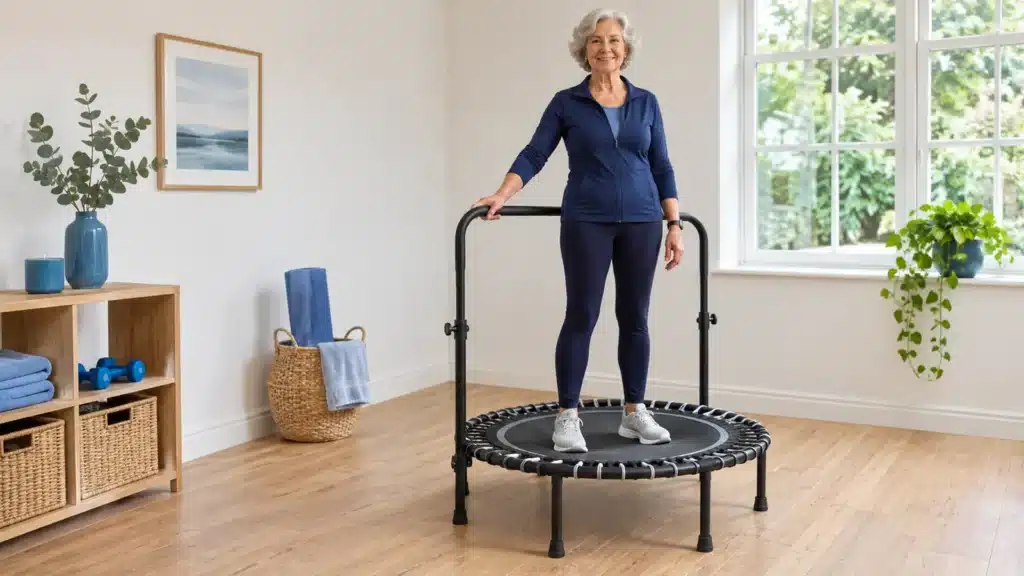
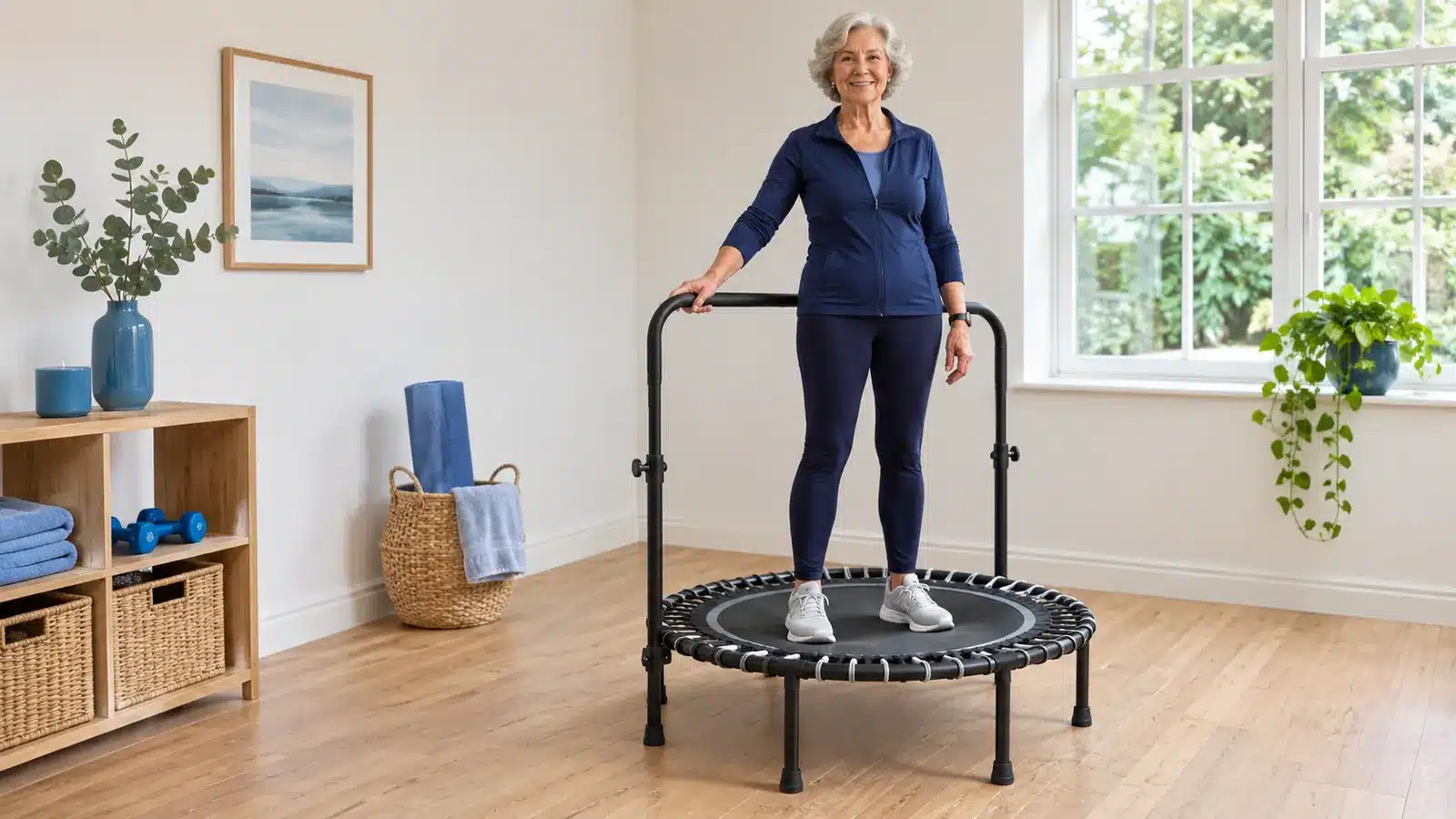
Quick answer: If rebounding is appropriate, prioritise a correctly assembled, stable frame, a usable mat area that accommodates a comfortable stance, a clearly stated user-weight limit, secure footing and a manufacturer-approved stability bar if needed. Do not assume that a handle makes a rebounder suitable for someone who requires substantial support to stand.
Health and balance first. The NHS recommends suitable strength and balance activities for older adults. It does not endorse a particular rebounder as universally suitable. Speak to a GP or relevant health professional if you have not exercised for some time or have medical concerns, balance difficulties or worries about falling.
When should an older adult seek professional advice before rebounding?
Age alone does not determine whether someone can use a fitness rebounder. Equally, marketing that describes bouncing as “low impact” does not establish that it is appropriate for an individual. Standing on a moving mat introduces a balance challenge even before the first bounce.
Seek individual advice if there are concerns about recent falls, poor balance, dizziness or fainting, pain, limited mobility or conditions affecting bones, joints or heart health. The NHS falls guidance recommends reviewing persistent balance problems and possible medication-related dizziness. People with osteoporosis and a high fracture risk or previous spinal fractures may need to avoid particular higher-impact movements; see the NHS guidance on bone health after 65.
If stepping onto a raised, unstable surface is difficult, a floor-based activity may be a better starting point. The NHS provides balance exercises near a wall or stable chair. A rebounder is optional equipment, not a prerequisite for staying active.
Seven checks before buying a rebounder for an older adult
- Intended use and user limits. Read the manual for the exact model. Check user-weight rating, permitted activities, assembly instructions and any age or health restrictions. A high advertised limit is not a medical or stability certification.
- Frame and leg stability. Look for a frame that stands evenly on the approved floor surface, secure leg connections and a locking system for any folding parts. Check the inspection schedule and availability of replacement parts.
- Usable mat area. Compare the standing/jumping surface, not just the advertised outer diameter. The mat should offer enough room for the person’s normal stance and small controlled movements.
- Safe entry and exit. Check the height from floor to mat, available side clearance and whether the intended user can step on and off without rushing or depending on an unsuitable handle.
- Correct bar attachment. If a bar is needed, confirm that the manufacturer approves it for that exact model. Check attachment points, height adjustment and whether it is described as a light balance aid rather than a weight-bearing handrail.
- Mat, cords or springs. Inspect how the suspension is maintained. Bungee cords and metal springs offer different bounce sensations, but neither makes a product automatically safer for joints or more appropriate for an older person.
- Space and storage. Measure floor area and overhead clearance. A folding frame is useful only if the person can open, lock and move it safely. Follow the manufacturer’s flooring guidance rather than assuming a loose rug adds stability.
These are buying criteria, not the results of laboratory or hands-on product testing. This guide does not certify a particular rebounder as medically safe.
Which type of rebounder should you compare?
A product shortlist is more useful when it explains trade-offs than when it gives an unsupported “safest” ranking. Start by comparing the types below, then check the current specification and manual of any actual model.
| Design | Possible benefit | Questions to check |
|---|---|---|
| Model with approved stability bar | Light reference for controlled movement. | Does the bar fit this specific frame? Is it suitable for balance guidance only or rated for more? |
| Model with a wider usable mat | Additional standing space for some users. | What is the real mat area, entry height and required floor clearance? |
| Folding model | Smaller storage footprint. | Are locking steps, weight and pinch points manageable? |
| Spring or elastic-cord suspension | Different feel and maintenance routines. | What does the manual say about limits, wear, replacement and small movements? |
For individual UK product options, our exercise trampolines with bars comparison focuses on equipment and buying trade-offs. This page focuses on additional suitability questions for older adults. Neither substitutes for the other.
Does a stability bar make rebounding safer for seniors?
A compatible bar can provide a light balance reference during controlled movement. It is not automatically a handrail, walking aid or fall-arrest device. A person who needs to pull heavily on a bar just to remain upright may need a different activity and an individual assessment before using a rebounder.
Before each use, check that the bar is attached to the correct model, that fittings are tight and that the frame is stable. Avoid improvised attachments or generic bars without manufacturer approval. Never assume the handle can bear the user’s full weight unless the manual explicitly states this.
Our separate workout trampoline with bar guide
Before the first session: a practical safety check
- Inspect the equipment. Look for damaged mat material, loose legs, worn springs or cords, and incorrect assembly. Do not use damaged equipment.
- Choose the correct location. Follow the manufacturer’s floor guidance and leave the required space at the sides and above. Keep nearby obstacles, pets and other people clear.
- Check entry and exit. Ensure the user can step onto and off the mat in a controlled way. Do not rely on a handle that is not designed as a mobility aid.
- Keep movement low and controlled. If rebounding has been deemed appropriate, begin within the product’s intended use. Acrobatics, high jumps and rapid turns are unnecessary for an introductory session.
- Stop if symptoms appear. Pain, dizziness, unusual breathlessness or loss of balance are reasons to stop. Seek medical help or advice when indicated by symptoms.
For a separate discussion of movement ideas, see rebounder exercises for seniors. An exercise video is not evidence that the movements are right for every viewer.
Frequently asked questions
What is the safest rebounder for seniors in the UK?
There is no universal safest model. Start with the person’s needs and the manufacturer’s instructions. Then compare frame security, actual mat width, entry height, user limits and compatible accessories. All rebounders carry some risk.
Are bungee rebounders safer than spring rebounders?
Not as a general rule. The feel differs by design, but joint protection and injury risk cannot be determined from the suspension type alone. Check the whole product, intended use and upkeep requirements.
Does every older person need a support bar?
No. A bar may help with light orientation when properly fitted, but it is not a substitute for a weight-bearing aid. Anyone who needs substantial support to stand should seek individual guidance first.
Can rebounding prevent falls or treat arthritis?
This guide does not claim that rebounding prevents falls or treats a medical condition. The NHS recommends appropriately selected strength and balance work, but does not endorse a rebounder as a treatment or universal solution.
What about osteoporosis?
That requires individual consideration. The NHS advises caution with some higher-impact activities for people with high fracture risk or spinal fractures; discuss suitability with an appropriate health professional before starting.
Bottom line
First establish whether a rebounder is suitable at all. If it is, compare the particular model’s assembly, size, user limits and maintenance instructions against what the intended user can realistically manage. When balance or health is a concern, seek appropriate advice rather than relying on a product’s safety claims.

Bounce Boss is the editor of Best Rebounder Trampoline UK. The site’s buying guides compare rebounder features, accessories and purchase conditions using manufacturer information and cited sources. Some articles contain affiliate links, which may earn us a commission.